

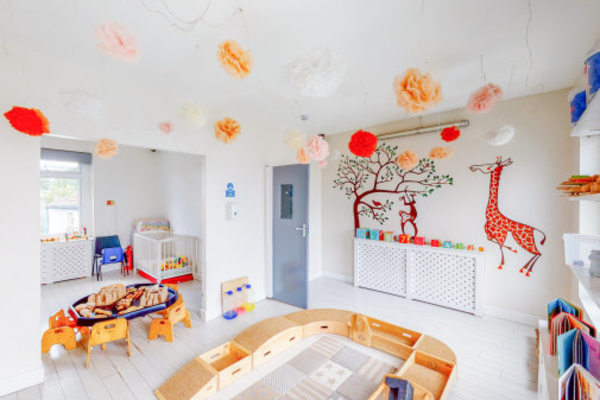
When parents look for a nursery, nursery staff ratios are an important part of understanding how children are cared for throughout the day. A nursery can have wonderful activities, welcoming rooms and a strong learning programme, but parents also need confidence that there are enough adults available to supervise and support children safely.
Staff-to-child ratios help set minimum expectations for staffing in early years settings. In England, the Early Years Foundation Stage (EYFS) statutory framework sets requirements for staff numbers, qualifications and children’s care, learning and development.
However, ratios are about more than counting adults and children. They can affect how closely children are supervised, how quickly practitioners can respond to individual needs, and how effectively a nursery can manage everyday activities.
At Goslings Nursery, children have always been at the centre of our approach. We want children to feel happy and comfortable in our childcare setting while parents feel confident that their children are being cared for properly. Our comprehensive staff training programme keeps our team up to date with guidance, techniques, learning programmes and first aid.
For parents considering childcare in Nunhead, understanding EYFS ratios, staff qualifications and nursery supervision can make it easier to ask the right questions and assess whether a nursery provides the level of care you expect.
What Are Nursery Staff Ratios?
Nursery staff ratios describe the number of children that can be cared for by each member of staff under the applicable early years requirements.
In simple terms, the ratio helps determine how many adults need to be available when children are being cared for. The required ratio can depend on the children’s ages and, for some age groups, the qualifications of staff working directly with them.
The rules are designed to make sure early years providers have enough staff to meet children’s needs and keep them safe.
This is particularly important because young children require different levels of support at different stages of development. Babies may need close physical care and attention. Toddlers often need help while developing independence. Older children may need more opportunities for group learning, social interaction and independent exploration.
Therefore, staffing is closely connected to the quality and safety of everyday childcare.
Parents should also remember that statutory ratios are minimum requirements. A nursery may choose to provide staffing above the minimum where it considers this appropriate for the children, activities or circumstances.
Why Do EYFS Ratios Matter?
The EYFS ratios are important because they create a clear regulatory framework for early years providers in England.
The EYFS statutory framework sets standards that childcare providers must meet for children’s learning, development and care from birth to five. It also contains requirements covering staff-to-child ratios and qualifications.
For parents, this provides an important baseline.
It means that staffing decisions cannot simply be based on how many adults a nursery would like to have in a room. Providers must meet the relevant statutory requirements for the children in their care.
However, ratios are only one part of a wider childcare system.
A parent should also consider:
- Staff qualifications and experience
- Safeguarding procedures
- Staff training
- First aid arrangements
- How children are supervised
- How staff communicate with children
- How individual needs are supported
- How the nursery manages routines
- How parents are kept informed
A good nursery understands that safety comes from the combination of appropriate staffing, trained practitioners, effective procedures and attentive care.
The Current Staff Ratios in England
Parents researching childcare in Nunhead are likely to come across different figures online. It is important to use current official guidance because early years requirements can change.
For group and school-based early years providers in England, the current EYFS framework sets specific minimum ratios based on children’s ages and staff qualifications.
Children Under Two
For children under two, the minimum ratio is generally one member of staff for every three children.
This reflects the high level of care and supervision that younger children require.
The current framework also includes qualification and training requirements for staff working with under-twos. For example, at least one member of staff must meet the relevant level 3 or approved experience-based requirements, while other requirements apply to level 2 qualifications and baby-care training.
This is especially important for parents with babies because care at this stage can involve feeding, sleep, comfort, physical support, personal care and close observation.
Two-Year-Old Children
For two-year-olds, the minimum ratio is one member of staff for every five children in registered group and school-based early years provision.
The framework also specifies qualification requirements for staff who count within this ratio.
Two-year-olds are becoming increasingly independent, but they still need close support.
They may be learning to communicate their needs, manage emotions, interact with other children and navigate new experiences. Having appropriate staffing helps practitioners respond to these needs while supporting children’s growing independence.
Children Aged Three and Over
For children aged three and over, the ratio can depend on whether an appropriately qualified teacher or equivalent is working directly with the children.
Where a person with Qualified Teacher Status, Early Years Professional Status or Early Years Teacher Status is working directly with children, the framework provides for a ratio of one member of staff to 13 children.
Where such a person is not working directly with children, the ratio is one member of staff to eight children in registered early years provision.
These figures demonstrate why parents should not look at a ratio in isolation. Staff qualifications can affect the applicable requirements.
Why Age Makes Such a Difference
Young children are not all at the same stage of development.
A room full of babies has different care requirements from a room of preschool-aged children. Therefore, nursery staff ratios reflect the different levels of support children may need.
Babies Need Close Attention
Babies rely heavily on adults for their basic needs.
They may require support with feeding, sleep, personal care, comfort and physical movement. They also need adults who can respond to their early communication, such as facial expressions, sounds and gestures.
Appropriate staffing helps practitioners give babies the responsive care they need.
Toddlers Need Support and Independence
Toddlers are often eager to explore.
They may want to do things themselves, but they are still developing the ability to manage emotions, communicate clearly and understand boundaries.
Practitioners therefore need to strike a balance between allowing children to explore independently and stepping in when support is required.
Older Children Need Space to Develop
Older children may be more independent, but they still require appropriate supervision.
They may take part in group activities, creative experiences, outdoor play and learning opportunities. Staff need to be able to observe children, encourage participation and respond when a child needs help.
So, while the level of physical care may change as children grow, supervision remains important throughout the early years.
Ratios and Childcare Safety
Parents often think about childcare safety in terms of doors, gates, hygiene and safeguarding policies. These are all important.
However, the people caring for children are also a major part of the safety picture.
Appropriate staffing allows practitioners to maintain awareness of what children are doing and respond to situations as they arise.
For example, children may move between activities throughout the day. They may play indoors, eat meals, take part in creative activities or spend time outside.
Each situation requires appropriate supervision.
The EYFS framework states that providers must meet requirements relating to children’s safety and welfare, as well as their learning and development.
Therefore, staffing should be viewed as part of a wider safeguarding and welfare system rather than as an isolated number.
What Does Good Nursery Supervision Look Like?
Good nursery supervision is about more than having adults physically present.
Practitioners need to remain attentive to children and understand what is happening around them.
Effective supervision can include:
- Knowing where children are
- Being aware of children’s activities
- Watching for potential risks
- Responding promptly when support is needed
- Helping children resolve disagreements
- Supporting safe play
- Understanding individual children’s needs
- Maintaining appropriate awareness during transitions
Supervision can look different depending on the activity.
For instance, outdoor play may require practitioners to consider the physical layout of the area and how children move around it. Mealtimes require attention to children’s needs and appropriate supervision. Group activities require practitioners to support participation while remaining aware of individual children.
This is why the quality of staffing matters alongside the numerical ratio.
Why Qualified Nursery Staff Matter
A nursery’s staffing levels are important, but so is the knowledge and experience of the people providing care.
The Department for Education sets requirements for the qualifications staff must hold to be included within specified EYFS staff-to-child ratios. The qualification requirements vary according to the level of responsibility and the children’s age group.
The Department for Education also provides an official service for checking whether early years qualifications meet its requirements for counting in staff-to-child ratios.
For parents, this highlights an important point.
You should not simply ask, “How many adults work here?”
It is also reasonable to ask about the experience, training and qualifications of the team.
Training Supports Confident Practice
Early years practitioners need knowledge that goes beyond simply supervising children.
They need to understand development, behaviour, safeguarding, communication, first aid and appropriate learning approaches.
At Goslings Nursery, our comprehensive staff training programme ensures that our team stays up to date with the latest guidance, techniques, learning programmes and first aid.
This ongoing commitment helps our team provide care that supports children’s wellbeing while giving parents greater confidence.
Experience Adds Another Layer of Understanding
Experience can help practitioners recognise children’s individual needs.
A practitioner who knows a child well may notice changes in their behaviour, communication or mood. They can then respond appropriately and communicate with parents where necessary.
This individual knowledge is particularly valuable in early years settings because children may not always be able to explain how they feel.
Ratios Can Support Individual Attention
One benefit of appropriate staffing is that practitioners can respond to children’s individual needs.
Young children are still learning how to communicate what they want and how they feel. Some may be confident in a group, while others may need more encouragement.
A nursery environment should give practitioners opportunities to understand these differences.
For example, one child may need help joining an activity. Another may need support resolving a disagreement. A third may need reassurance during a change in routine.
Good staffing supports practitioners as they respond to these everyday situations.
This does not mean that every child receives one-to-one attention all day. Instead, it means the nursery has appropriate staffing arrangements to supervise groups while responding to children’s individual needs.
How Staffing Can Support Learning
Staffing is also connected to early learning.
Children learn through play, conversations, exploration and everyday experiences. Practitioners help turn these experiences into opportunities for development.
A practitioner might encourage a child to describe what they are doing during play. They might ask questions that help a child think about a problem. They may introduce new vocabulary during a story or help children cooperate during group activities.
These interactions can support areas of development covered by the EYFS.
The EYFS framework covers children’s learning and development from birth to five and includes communication and language, physical development, personal, social and emotional development, literacy, mathematics, understanding the world, and expressive arts and design.
Therefore, staff are not simply there to “watch” children.
They play an active role in supporting children’s development.
Staff Ratios and Daily Nursery Routines
A nursery day includes many transitions.
Children may arrive, settle into activities, eat, play, rest and move between different areas. These changes can require additional attention.
Appropriate staffing helps practitioners manage these transitions safely and calmly.
Arrival and Collection
The start and end of the nursery day can be busy.
Staff need to remain focused on children while also communicating with parents and managing arrivals or collections.
Clear procedures and appropriate staffing can help maintain a calm environment.
Mealtimes
Mealtimes are another important part of the nursery routine.
At Goslings Nursery, we provide healthy, balanced and nutritious food that meets the Early Years Foundation Stage requirements.
Mealtimes also provide opportunities for children to develop social skills and independence. At the same time, children need appropriate supervision while eating.
Indoor and Outdoor Play
Children benefit from opportunities to move, explore and play.
Whether they are indoors or outdoors, practitioners need to remain aware of children’s activities and the environment around them.
This is another reason why staffing cannot be separated from supervision and safety.
How Goslings Nursery Approaches Safety and Care
At Goslings Nursery, our priority has always been the children in our care.
We want children to feel happy and comfortable while they are with us. We also understand that parents need confidence in the people and systems responsible for their children.
Our approach includes comprehensive staff training covering guidance, techniques, learning programmes and first aid.
We also maintain a strict safeguarding policy that is never compromised.
With 26 years of experience, we have built a positive management team and established systems that support hygiene standards and behaviour policies.
This approach reflects our wider commitment to providing a safe and supportive environment where children can learn and develop.
What Parents Should Ask About Nursery Staff Ratios
If you are visiting a nursery in Nunhead, you do not need to be an expert in the EYFS regulations.
However, a few simple questions can help you understand how the setting approaches staffing.
Consider asking:
- What are your staff-to-child ratios?
- Which age groups do your ratios apply to?
- What qualifications do the practitioners hold?
- How does staff training work?
- How do you maintain supervision during outdoor play?
- How are children supervised during mealtimes?
- What happens if a member of staff is absent?
- How do you support children with individual needs?
- How do you manage transitions during the day?
- What safeguarding procedures are in place?
A good nursery should be comfortable discussing its approach to staffing and children’s safety.
Should Parents Look for Ratios Above the Minimum?
Parents may wonder whether a nursery should always operate above the statutory minimum.
There is no simple rule that says every nursery must maintain the same staffing level at all times beyond its applicable requirements. The EYFS sets minimum requirements, while providers may choose to exceed them depending on their circumstances and the needs of the children.
The key point is to understand how the nursery manages staffing in practice.
Ask how the team plans for everyday routines, staff absence, activities, outdoor play and children’s individual needs.
A nursery’s overall approach matters more than focusing on one number.
Ratios Are Only One Part of Choosing a Nursery
Staffing ratios are important, but they should not be the only factor parents consider.
A nursery can meet the required ratios and still need to demonstrate how it supports children through its wider policies and practices.
When comparing nurseries, consider the full picture.
Look at:
- Safeguarding
- Staff experience
- Staff qualifications
- Training
- Hygiene
- Behaviour policies
- Nutrition
- Learning opportunities
- Communication with parents
- Settling-in arrangements
- The general atmosphere
At Goslings Nursery, our commitment to children includes each of these wider aspects of care.
Our testimonials from past and present parents reflect our commitment to children’s development and wellbeing. We take pride in watching children grow, learn and enjoy their time with us.
How Parents Can Assess Nursery Supervision During a Visit
A nursery visit can tell you more than a website description.
Instead of only looking at the rooms and facilities, pay attention to how practitioners interact with children.
Look for staff who:
- Know the children they are caring for
- Speak calmly and respectfully
- Respond when children need support
- Encourage children to participate
- Observe children’s activities
- Help children develop independence
- Communicate naturally with children
Also consider how children respond to staff.
Do they appear comfortable? Are they willing to approach practitioners? Do staff seem attentive to what is happening around them?
These observations can help you understand the quality of the environment.
Why Staffing Matters to Parents and Children
For parents, appropriate staffing can provide reassurance.
You want to know that your child is not simply placed in a room with other children. You want to know that practitioners are present, attentive and prepared to support them.
For children, the benefits can be seen in everyday moments.
A child can ask for help when they need it. They can receive reassurance after becoming upset. They can be encouraged when trying something new. They can participate in activities with the support of familiar adults.
These small interactions are important.
Over time, they can help children develop confidence, independence and positive relationships with others.
Building Trust Between Parents and Nursery Teams
Safety also depends on trust.
Parents need to feel comfortable sharing information with nursery staff. Practitioners, in turn, need to communicate clearly with families.
This relationship can be particularly important when children are young because parents may notice things at home that help practitioners understand their behaviour or development.
At Goslings Nursery, we believe parents should feel comfortable and confident while their children are in our care.
Our promise is not simply about providing childcare. We enjoy being part of each child’s learning journey and watching them develop over time.
A Simple Parent Checklist for Evaluating Staffing
When comparing nurseries, use this checklist as a starting point:
1. Staffing
Ask about the nursery’s staff-to-child ratios and how they are managed throughout the day.
2. Qualifications
Find out about the qualifications and experience of practitioners who work directly with children.
3. Training
Ask whether staff receive ongoing training and whether first aid and other relevant training are kept up to date.
4. Supervision
Find out how children are supervised during play, mealtimes, outdoor activities and transitions.
5. Safeguarding
Ask about safeguarding policies and how the nursery protects children’s welfare.
6. Individual Support
Ask how staff get to know each child and respond to their individual needs.
7. Communication
Find out how parents are kept informed about their child’s day and development.
These questions can help you look beyond the number of staff in a room and understand the nursery’s overall approach to care.
Conclusion
Understanding nursery staff ratios can help parents make more informed decisions about childcare and safety. EYFS ratios provide minimum staffing requirements, but parents should also consider staff qualifications, training, safeguarding, supervision and the overall quality of care.
At Goslings Nursery, we combine experience, staff training, safeguarding procedures and a strong commitment to children’s wellbeing. With 26 years of experience, we understand the importance of creating a setting where children feel safe, comfortable and supported while they learn and grow.
If you are comparing nurseries in Nunhead, we welcome you to learn more about our approach and see our childcare environment for yourself. Contact Goslings Nursery today to arrange a visit and speak with our team about how we support your child’s safety, care and early development.
Frequently Asked Questions
1. What do nursery staff ratios mean?
Nursery staff ratios describe the minimum number of staff required in relation to the number and age of children being cared for. In England, these requirements are set through the EYFS statutory framework.
2. What are the EYFS ratios for children under two?
For registered group and school-based early years provision in England, the minimum ratio for children under two is generally one member of staff for every three children. Additional qualification and training requirements also apply.
3. What is the staff-to-child ratio for two-year-olds?
For two-year-olds in registered group and school-based early years provision in England, the minimum ratio is generally one member of staff for every five children. The EYFS also specifies qualification requirements for staff included in the ratio.
4. Why are nursery staff ratios important for childcare safety?
Appropriate staffing helps ensure that there are enough adults available to supervise children and respond to their needs. Ratios form part of the wider EYFS requirements for children’s safety, welfare, learning and development.
5. Do staff qualifications affect EYFS ratios?
Yes. The required ratio for some age groups depends on the qualifications of staff working directly with children. The Department for Education provides requirements and guidance on which qualifications can count towards EYFS staff-to-child ratios.